How we work
How we run projects: from a free initial conversation, through the contract and iterative delivery, to maintenance. We set out the terms clearly before we sit down to sign a contract.
From the first conversation to maintenance
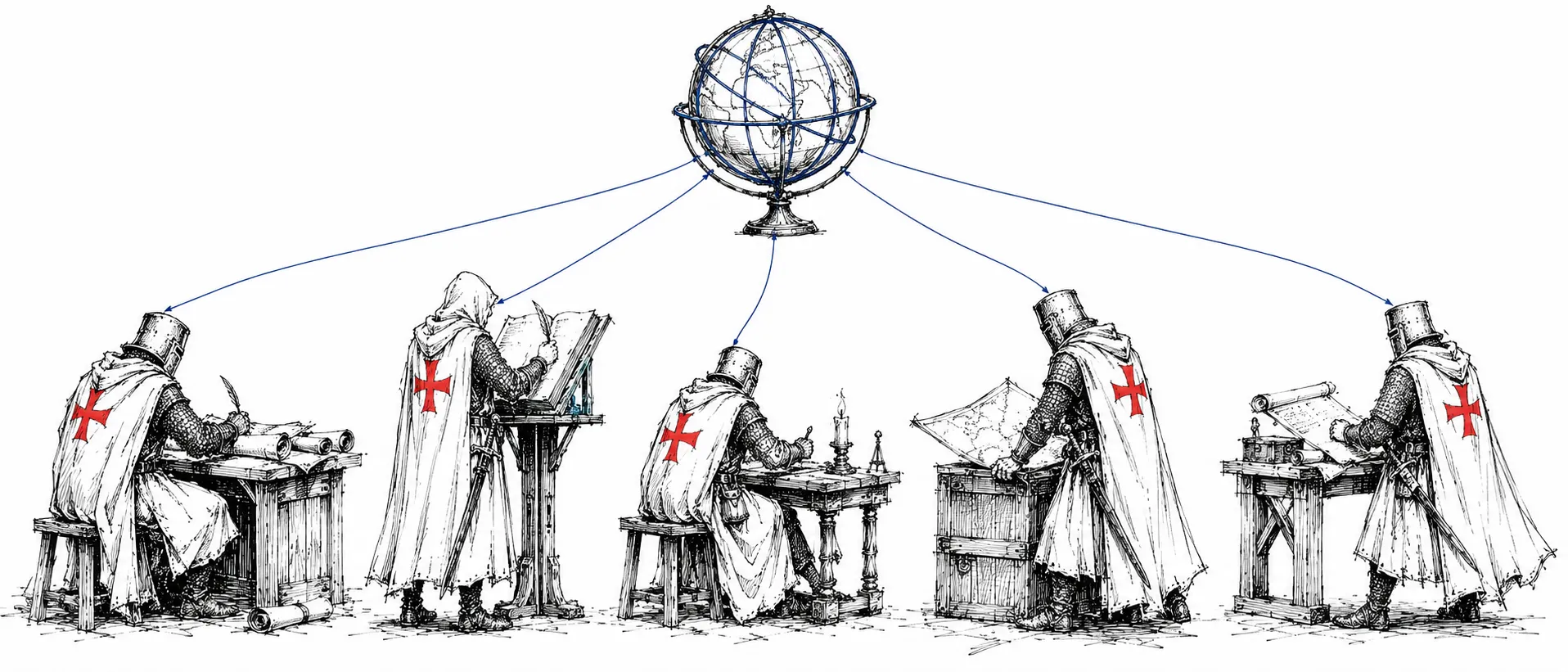
Every project goes through the same stages, their length varies, their order doesn’t. We match the team to the stage: technology experts, developers, designers and project managers.
Initial conversation
Free of charge. We learn the problem, its scale and the organisational context. It ends with an honest answer on whether we are the right partner.
Analysis and estimate
We describe the scope, risks and solution architecture. You receive an estimate together with the assumptions behind it.
Contract
We agree the scope, schedule, fees, rights to the work produced and the terms of post-launch support.
Iterative delivery
We work incrementally and regularly show working parts of the system. You see the progress, not just a report at the end.
Launch and acceptance
We deploy the system to production, hand over the documentation and train users. Acceptance follows the criteria written into the contract.
Maintenance
After launch we move to an agreed level of support, from handling individual tickets to a full SLA with response times.

What we work with and how we build systems
Proven, stable technologies, no fashionable experiments in production. Technologies that your own team or another company can maintain as well.
Principles we don’t negotiate
- Code is reviewed, and every deployment has a rollback plan.
- We transfer the economic copyright in custom software to the client upon payment of the fee.
- We always hand over the repository, technical documentation and infrastructure access, another team can take over maintenance.
- We treat your data, code and organisational information as confidential.

Three models, no hidden items
We choose the model based on how well the scope can be defined before we start, in different phases of one project we often combine the first two.
Fixed price
A fixed price for a defined scope. On longer projects we split the fee into stages tied to the acceptance of specific deliverables.
Time and materials
Billing for the work actually performed, where the scope takes shape along the way. Every invoice comes with a breakdown of the tasks performed.
Support and SLA
Maintenance after launch: handling individual tickets, or an SLA agreement with guaranteed response times matched to how critical the system is.
What you get with the invoice
- With time-and-materials billing: a breakdown of the tasks performed.
- With a fixed price: billing for each stage tied to the acceptance of its deliverables.
- No hidden items: fees, deadlines and how hours are accounted for are agreed up front.
Formal terms
- An individual contract or order, no one-sided terms of service in fine print.
- A change of scope is a deliberate decision by both sides, written down before the work, not after it.
- Payment terms and currency are set by the contract. If work ever has to be suspended, we give notice well in advance.
Order a project
Describe what needs to be built or what has stopped working. The first conversation is free and without obligation, it ends with an honest answer on whether we are the right partner.
Go to contactRemote and flexible: on your side too
We work remotely, so you don’t pay for travel time to meetings. Where the nature of the system calls for it, we come on site.
- We work remotely by default, that keeps project costs down.
- We run workshops and pre-implementation analysis on site when the nature of the system calls for it.
- We carry out key deployments at the client’s premises, together with their team.
- We also welcome you to meetings at our offices in Bielsko-Biała, Bystra and Jelenia Góra.